 |
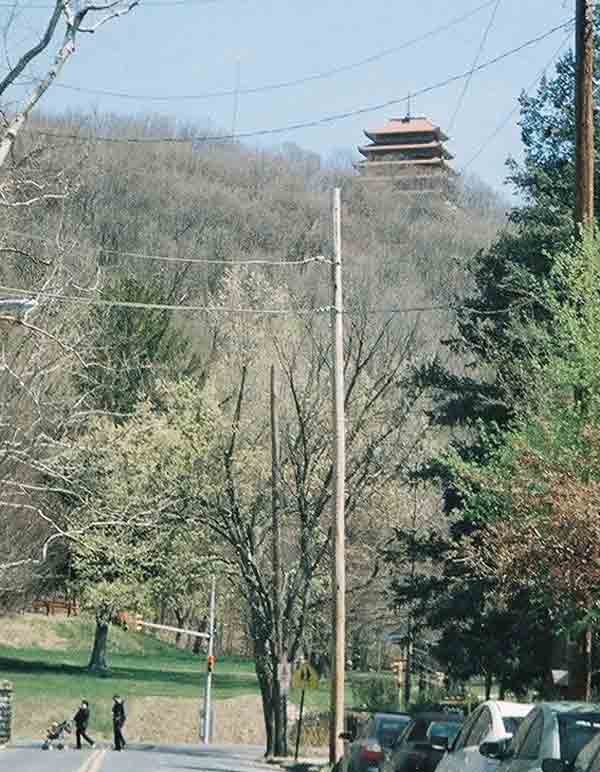
| Is it Japan? No, it's Reading, at the foot of Mount Penn, on top of which is a pagoda. To get to the pagoda, we are going to drive up the same steep road Charles Duryea drove up. It was a big deal when he did it in 1892 in the first gasoline-powered car built in the U.S. |
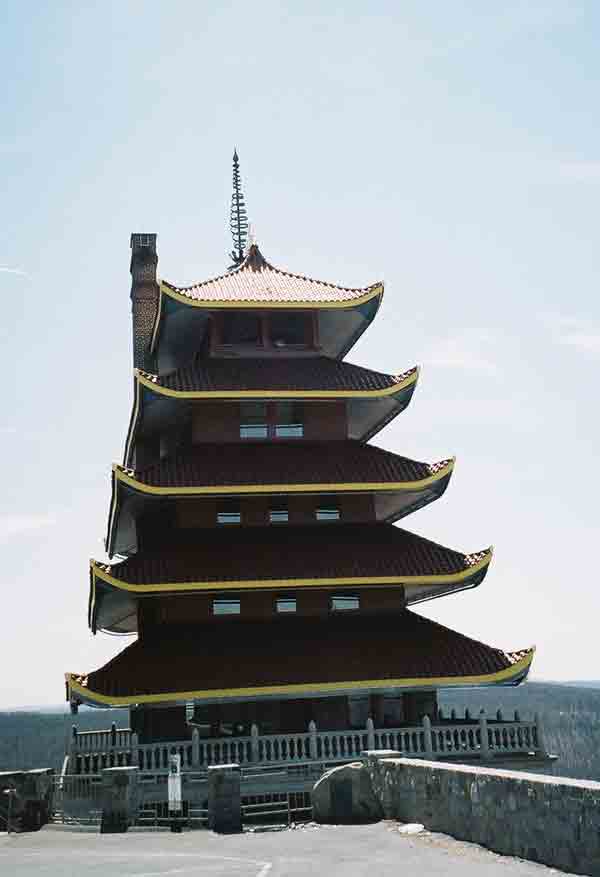 |
| The pagoda--built in 1911 when Japanese stuff was "in,"-- was the gift to the city of a wealthy couple. It is soon to be reopened as some kind of arts center. Reading is a very nice clean city with thriving neighborhoods on its west side. With the congestion-relieving Route 222 expressway finally completed after many decades, getting in and out of town is now a breeze. |
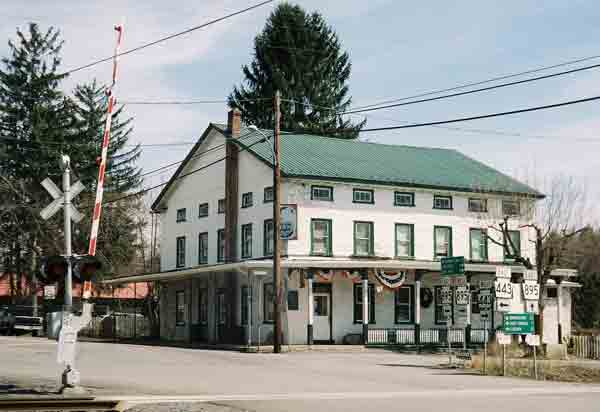 |
| There is a tavern in the town. The town is New Ringgold, set in the midst of the Christmas tree plantations north of Reading. The tavern was certainly a hotel at one time. |
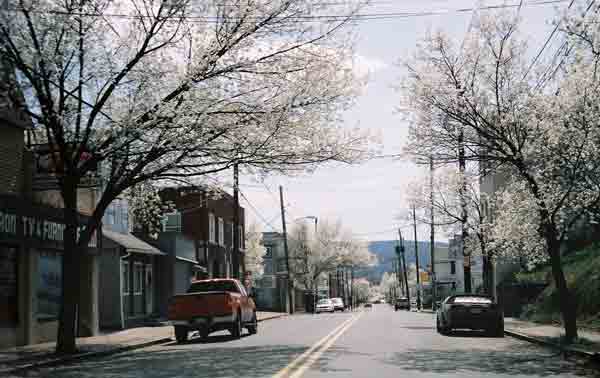 |
| And here we are on cherry-tree-lined Hazle Street in Wilkes-Barre, heading toward my parents' hometowns, Sugar Notch and Ashley. |
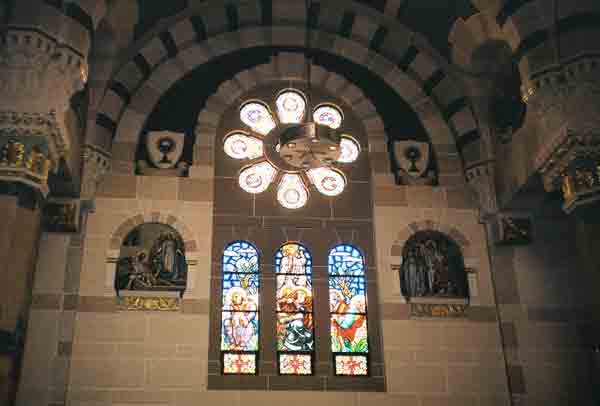 |
| Just off Hazle Street is St. Patrick's church, an amazingly sumptuous building for a coal-mining area. All the old churches are pretty but whoever paid for putting up St. Patrick's around 1940 contributed some serious dough. It's all cut stone with a copper roof. It was an Irish parish, but the stations have an eastern look about them. Perhaps they were done by an Eastern-rite or orthodox artist. |
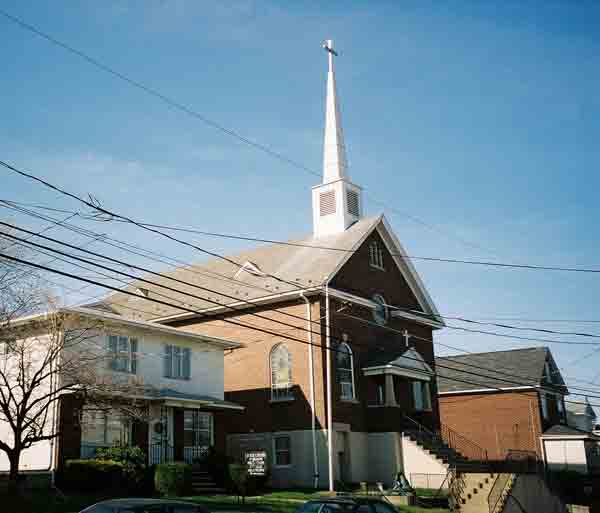 |
| The Polish National Catholic Church is a schismatic break-off from Roman Catholicism. It was founded in Scranton in 1897 by Polish immigrants who felt they were being dissed by the Irish and German clergy who ran parishes back then. This is one of the Polish National Catholic churches in Wilkes-Barre. The PNCC is working its way back to full communion with Rome. |
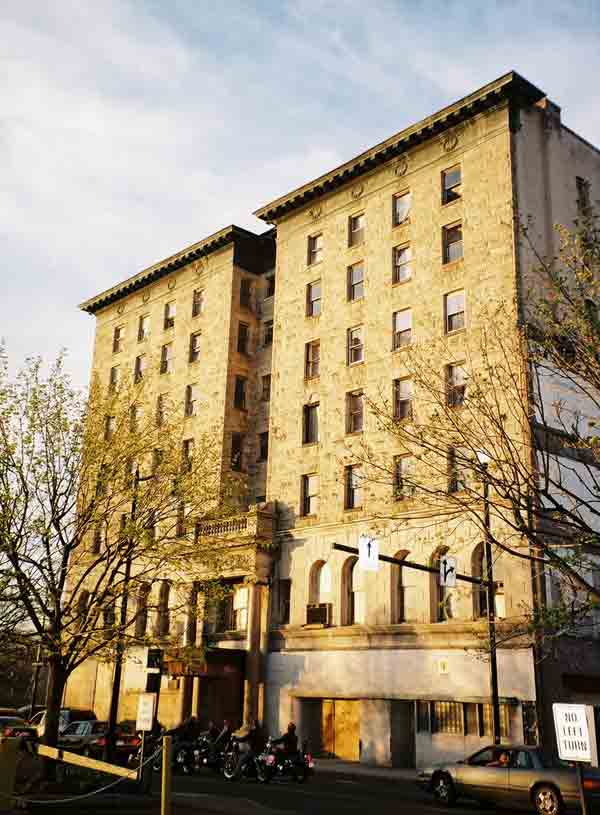 |
| The sun sets on The Sterling Hotel where my parents had their wedding reception in 1948. Built over 100 years ago, The Sterling was Wilkes Barre's finest for decades. I recall having lunch there around 1980 when it was a flophouse. It is now boarded up. |
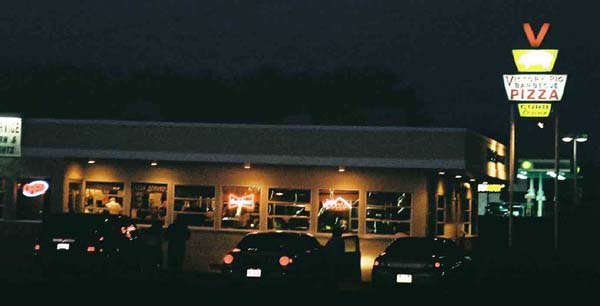 |
| It is said that the best pizza in the world is served in Northeastern PA. This place, The Victory Pig, in Forty Fort lends credence to that. It has served its unique, square, mostly-onion-topped pizza for decades. Blow your horn and flash your lights for curb service. I prefer the 1960s interior myself where one can hear the sound of a bottle of Yuengling being slammed on the table by the surly waitress. There was an actual fort at Forty Fort and it figured in the Battle of Wyoming in 1778. During that battle, Tories and their Indian pals roamed around the Valley slaughtering Patriots. |
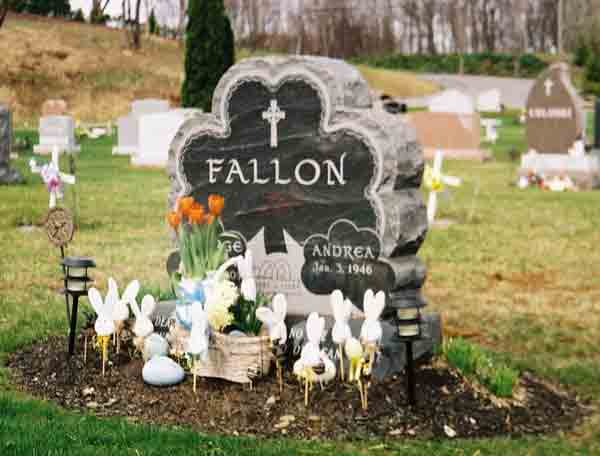 |
| Now it's off to St. Mary's Cemetery where we find that the Fallons were all ready for Easter. Holiday decorations on graves in St. Mary's are themselves worth a web site. I made sure some of my people had solar night lights by their markers before I left. |
 |
| Not far from some of my relatives is buried Congressman Daniel J. Flood (1903-1994). He is probably buried in a white suit. In Luzerne County, it was Father, Son, Holy Spirit and Dan Flood. The wax-mustachioed former actor did help his district get through the collapse of the coal-mining industry and the devastation of a couple tropical storms. He brought a VA hospital to the area and some of my relatives who work there to this day can thank him. Flood was dislodged from the House by a bribery censure. My Dad, who in college worked in Flood's office, said he was an arrogant but honest guy who was set up. |
 |
| With St. Charles, the Conway's church now closed, the only Catholic Church in Sugar Notch is Holy Family. This traditional Polish Church was my maternal grandmother's. I have her First Communion picture taken on the steps here 1916. The Conways have settled in. My cousin Mary Kay is the "Music Director," meaning "the organist" when she's not working at the VA hospital. |
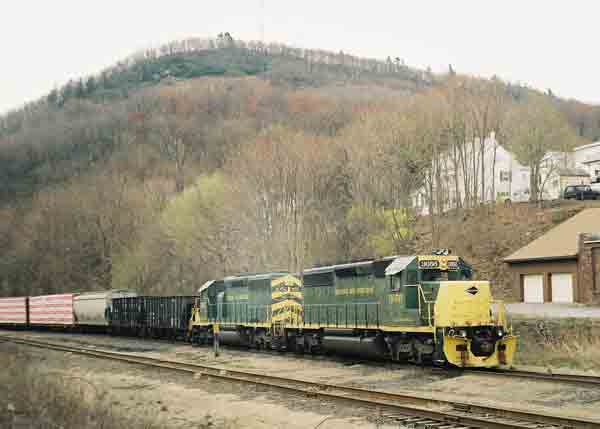 |
| Sunday morning in Tamaqua. My earliest memory of Tamaqua is the sight of old steam locomotives sitting in its exensive rail yards. The engines were probably awaiting the scrapper's torch. Tamaqua was a place through which the Reading Railroad hauled coal out of the First Field and down along the Little Schuylkill River. In the 1850s and 60s, the Molly Maguires inspired terror in this area and The Reading Co. used them to portray unions as a bunch of thugs. Today what's left of the old Reading right-of-way is used by the Reading, Blue Mountain & Northern, one of PA's several new railroads run by train buffs. There is still money to be made hauling lumber, cement and of course, coal. Here an RBMN lash-up idles while the engineer goes to Burger King. |